
RPG-Inspired Fantasy Without the Stats
Is Dungeon Lords LitRPG? The D&D Roots Behind the Fate of Evania
Classifying Dungeon Lords: Fate of Evania by J.B. Coleman
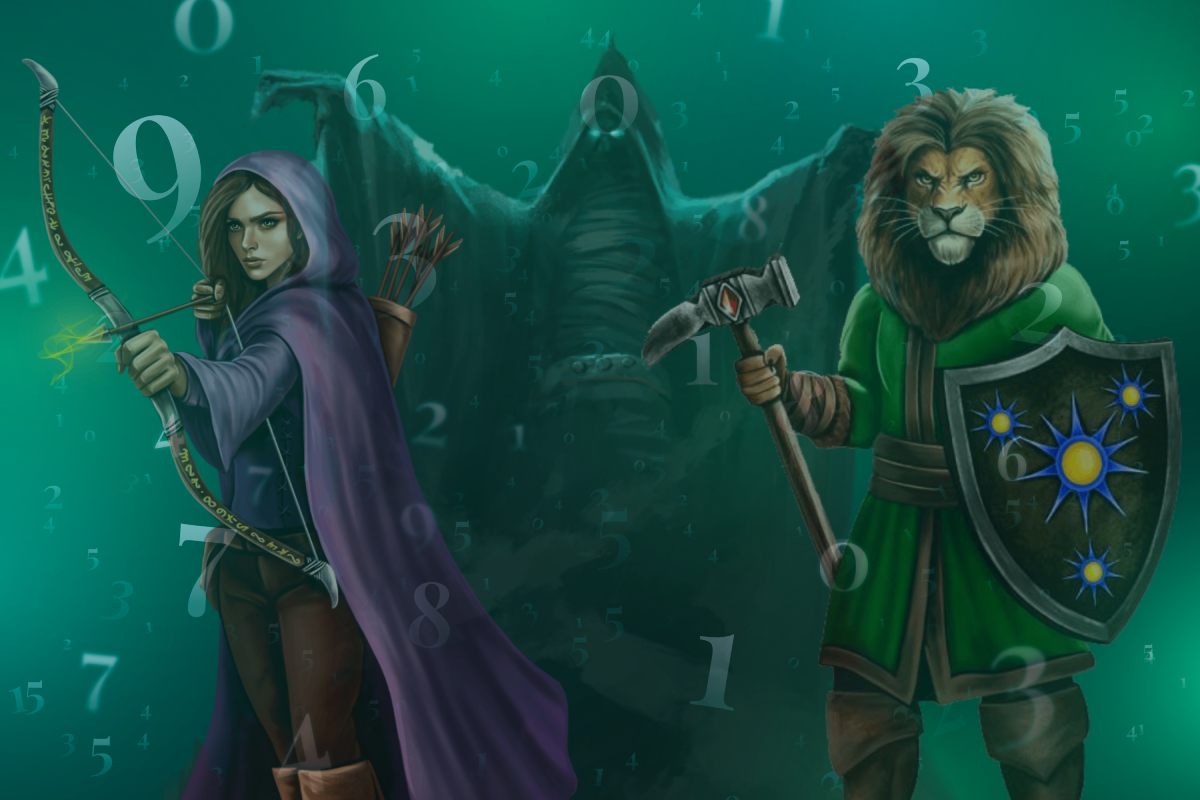
If you've encountered Dungeon Lords for the first time, the name alone might give you a pretty good idea of what you're getting into.
There are dungeons. There are adventuring parties.
There are elves, dwarves, magic, monsters, quests, kingdoms, ancient artifacts, and plenty of things that would feel right at home around a Dungeons & Dragons table.
But there's one thing you won't find:
Stats.
Dungeon Lords is not LitRPG.
There are no character sheets interrupting the story. Faro doesn't gain experience points after defeating an enemy. Lena doesn't have a mana bar. Tobi doesn't suddenly discover that his Axe Skill increased to Level 17.
The Fate of Evania series takes a great deal of inspiration from tabletop role-playing games, classic fantasy adventures, and the experience of gathering a group of wildly different characters together before sending them somewhere dangerous.
The game influences are everywhere. The game mechanics aren't.
So what exactly is Dungeon Lords, and where does Dungeons & Dragons fit into it?
Experience A World Before the Dungeon Lords®
Get this 221 page book FREE!
Set long before the events of The Lost Disciple, long before the Dungeon Lords came to be, explore the events of Tahlari!

What Is LitRPG?
LitRPG, short for Literary Role-Playing Game, is a genre of fiction that incorporates recognizable role-playing game mechanics directly into the story.
The exact implementation varies tremendously between books, but LitRPG frequently includes things such as character levels, experience points, statistics, skills, classes, quests, inventories, or other systems that would normally exist behind the scenes in a video game or tabletop RPG.
Those mechanics aren't simply inspiration. They're part of the fictional reality.
A character might know they've reached another level.
They may be able to see their own statistics.
Improving a skill might produce a measurable result.
The reader gets to experience progression through systems resembling those of a game.
That's not what happens in Dungeon Lords. Not because there’s anything wrong with stats and leveling if that’s your thing, but because I like reading epic fantasy, so that’s what I wrote!
Faro can become a better fighter, but he does so because of experience, training, failure, and survival.
Lena's magic can change and develop, but there isn't a number attached to it.
Characters become stronger, weaker, wounded, exhausted, frightened, wiser, and occasionally much worse at making decisions.
They just don't receive a notification telling them so.
So What Kind of Fantasy Is Dungeon Lords?
The Fate of Evania series is dark epic fantasy heavily influenced by tabletop role-playing games and traditional fantasy adventure.
At the center of the story is a found-family adventuring party composed of characters with very different abilities, personalities, histories, and reasons for being there:
- Faro is a lion-man missing much of his past.
- Lena is an ancient elven mage carrying thousands of years of history, and she’s only middle-aged.
- Tobi is a stubborn dwarf who would probably prefer everyone stop dragging him into increasingly dangerous situations.
- Mathias is a healer whose abilities don't necessarily provide solutions to problems that can't be healed.
- Thora is a beastmaster with fierce loyalties of her own.
- Veronica is a human girl discovering that she may have a much stranger role in this world than anyone expected.
Others join them along the way.
Put those people together, give them a problem, and see what happens.
That structure should feel very familiar to anyone who has spent time playing tabletop RPGs. I loved the story-telling aspect of Fate Core, so that’s where Dungeon Lords originated before it was turned into a novel series.
I also become enthralled with the DM’s ability to thread stories together while watching Matt Mercer lead Critical Role. The party and storytelling aspect is where much of the D&D influence becomes most obvious.

The Party Is More Important Than the Character Sheet
One of my favorite things about tabletop role-playing games isn't necessarily the mechanics.
It's the party and the story they tell together.
You can create an elaborate fantasy world, write an incredible campaign, design terrifying monsters, and carefully balance every encounter.
Then five people sit down at the table and immediately do something you didn't expect.
That's where the story comes alive.
The characters aren't interesting simply because they possess different abilities. They're interesting because different people are forced to solve the same problems together.
The warrior wants to fight.
The mage sees a magical solution.
The healer wants everyone to stop getting themselves injured.
The rogue has already wandered off while everyone else was arguing.
Someone makes an incredibly stupid decision.
Everyone else has to live with it.
That's much closer to the RPG DNA behind Dungeon Lords.
Faro's party works because its members compensate for one another. They bring different skills to the group, but they also bring different perspectives.
A problem that Faro tries to solve through strength might look completely different to Lena.
Something Mathias considers morally unacceptable might seem necessary to Thora.
Tobi might just think everyone involved is an idiot.
The story emerges from those differences.

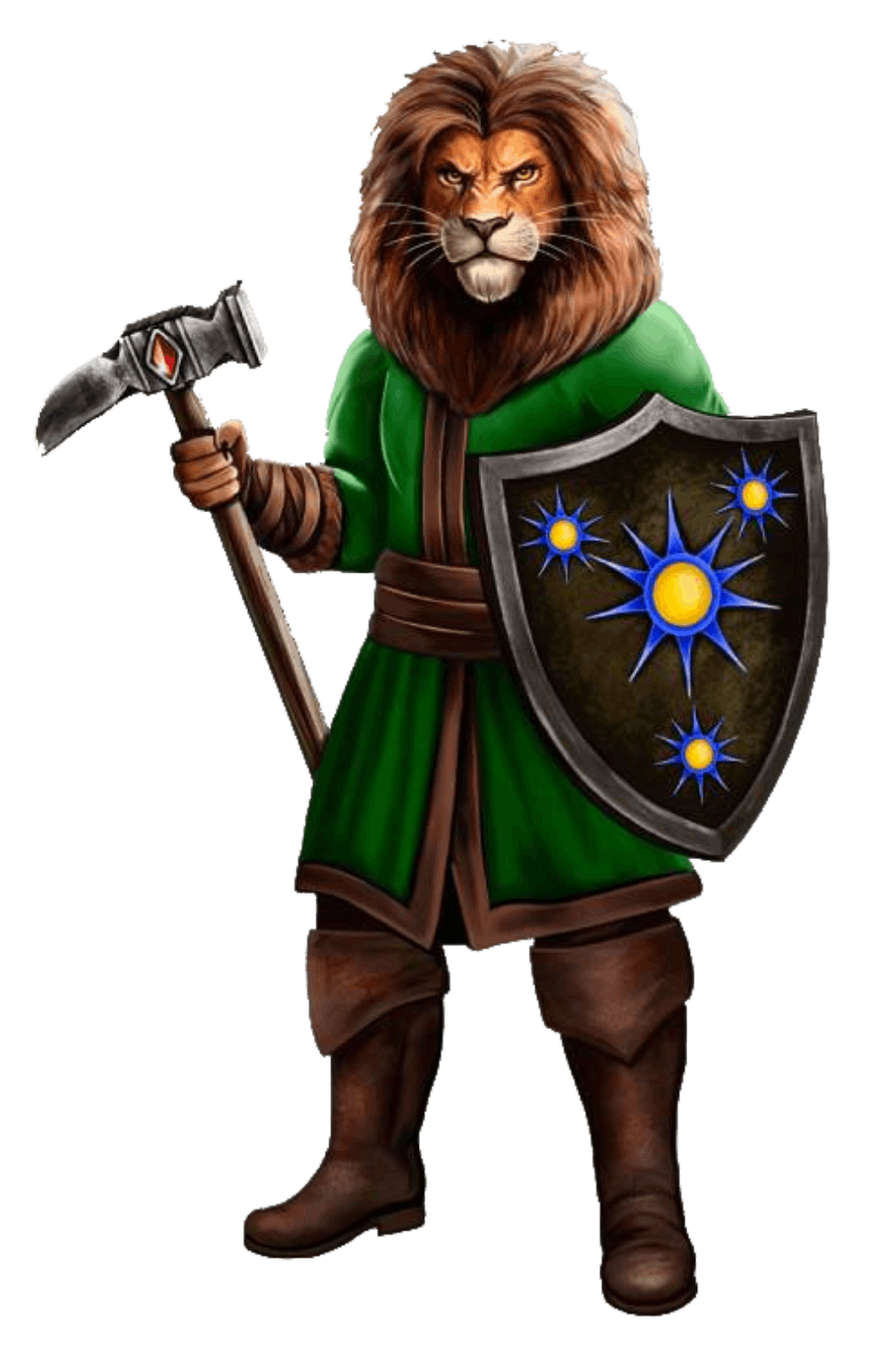
Don't Split the Party
And then, of course, there's one of the most famous pieces of tabletop advice:
Don't split the party.
Anyone who has played enough D&D understands why.
A party is usually built from complementary strengths and weaknesses. Separate those characters and suddenly the healer doesn't have the fighter protecting him. The fighter doesn't have the mage solving problems strength can't overcome. Everyone loses access to something they didn't fully appreciate until it disappeared.
This idea becomes particularly important as the Fate of Evania series grows.
The characters aren't interchangeable pieces being moved around a board. Different combinations create different kinds of stories because the people available determine which solutions are possible.
That's part of the tabletop influence too.
A dungeon isn't dangerous simply because the monsters have high stats.
It's dangerous because the party has limited resources, imperfect information, conflicting personalities, and no guarantee that their plan is going to survive contact with whatever is waiting around the corner.
Sometimes the smartest thing you can do is keep everyone together.
Sometimes circumstances make that impossible.
That's usually when things get interesting.
Dungeons Without Dungeon Levels
Dungeons are obviously an important part of something called Dungeon Lords.
But these aren't video-game spaces designed primarily to provide increasingly difficult enemies until the characters reach a boss.
A dungeon can be a place.
It can be a mystery.
It can reveal something about Evania's history.
It can contain puzzles, creatures, traps, artifacts, or information that changes the direction of the larger story.
Most importantly, dungeons exist within the world. Rest assured that every book will take you into a new dungeon, for better or for worse.
Characters don't enter them because a quest marker appeared above someone's head. They have reasons for being there, and whatever they discover can continue affecting the story long after they've found their way back out.
That distinction matters.
The dungeon isn't the game.
The dungeon is part of the world.
The Characters Don't Know They're in a Game
This might be the simplest way to explain the difference between Dungeon Lords and LitRPG.
The characters aren't players.
They aren't trapped inside a game.
They don't know they're participating in a role-playing system.
There is no system.
Evania is simply their world.
Magic is real because magic exists there.
Elves and dwarves exist because they're inhabitants of Evania.
Monsters don't have challenge ratings.
People don't respawn.
Nobody is protected because they're an important character.
If someone makes a terrible decision, there can be permanent consequences (again nodding to Fate Core influences where characters can have permanent injuries that change their abilities).
The RPG influence exists outside the world, in the construction of the adventure, the party dynamics, some of the creatures and fantasy traditions, and the kinds of situations the characters encounter. Throw in the occasional meta joke that RPG and video game players will get, and you have a very down-to-earth, narrative-driven story.
Inside Evania, everything is real.
Where the D&D Influence Really Shows
The influence of Dungeons & Dragons and tabletop fantasy goes considerably deeper than simply having elves and dwarves.
It's present in the structure of the adventures.
Characters travel into unfamiliar territory without knowing exactly what they'll encounter. Problems can have multiple solutions. Combat matters, but fighting isn't always the answer. Information discovered in one place can become important much later. Encounters don’t always go as planned.
It's present in the party composition.
Characters have strengths and weaknesses that become more apparent depending on who they're traveling with.
It's present in the world.
Different kingdoms have different cultures, histories, governments, conflicts, and relationships with magic.
It's present in the monsters.
Some are recognizable fantasy creatures. Others belong specifically to Evania.
It's present in the quests.
A seemingly straightforward objective can reveal something much larger once the characters actually start pulling on the thread.
And perhaps most importantly, it's present in the feeling that the characters are moving through a world much larger than the adventure directly in front of them.
There is always another road.
Another kingdom.
Another dungeon.
Another story happening somewhere the party isn't looking.
RPG-Inspired Fantasy Without the Numbers
That's ultimately the distinction.
Dungeon Lords isn't trying to recreate the mechanical experience of playing an RPG.
It's trying to capture the storytelling experience of one.
Gather a party.
Give everyone different strengths.
Give them different weaknesses.
Build a world worth exploring.
Send them somewhere dangerous.
Let their decisions have consequences.
And see who they become along the way.
There doesn't need to be a number floating above Faro's head for his experiences to change him.
A wound can accomplish that.
A betrayal can accomplish that.
A friendship can accomplish that.
Discovering something about his forgotten past can accomplish that.
Characters progress because the story changes them, not because they've accumulated enough experience points to reach the next level.
From Tabletop Adventures to Epic Fantasy
As the Fate of Evania series expands, the scale of the story expands with it.
These aren’t just serialized adventures where one novel neatly wraps up an adventure, and then awhile later another adventure begins.
What begins as an adventure with a relatively small group of characters gradually reveals conflicts involving kingdoms, political powers, ancient history, magic, artifacts, and forces whose influence extends far beyond a single dungeon.
That's where the epic fantasy side of Dungeon Lords becomes increasingly important.
The party still matters.
The quests still matter.
The dungeons still matter.
But they're pieces of something much larger.
A dungeon might contain an artifact tied to events elsewhere in Evania.
A decision made in one kingdom might create consequences in another.
A character's personal history might intersect with events that began long before the current adventure.
The world doesn't reset when a quest ends.
It remembers.
What About Progression Fantasy?
There's another neighboring genre worth mentioning because Dungeon Lords can occasionally appear alongside it: progression fantasy.
Progression fantasy generally places substantial emphasis on characters deliberately increasing their power, abilities, rank, or mastery over the course of the story.
There can certainly be progression in Dungeon Lords. Characters learn. Their abilities change. They acquire knowledge and experience. Some discover things about themselves they didn't previously understand.
But progression isn't the central promise of the series.
The question isn't:
How powerful can Faro become?
It's closer to:
Who is Faro, what happened to him, and what role does he have in what's happening to Evania? How does he have to get better to succeed?
Likewise, Lena's story isn't primarily about unlocking increasingly powerful tiers of magic.
Tobi isn't grinding his axe skill.
The characters grow because they're living through a story.
Sometimes that growth even makes them less capable in one way while making them stronger in another.
Progress isn't always upward.
If You Like D&D Fantasy But Don't Want LitRPG
This is probably the reader for whom the distinction matters most.
Maybe you love Dungeons & Dragons and math rocks.
Maybe you grew up with fantasy RPGs.
Maybe you want adventuring parties, strange races, magic, quests, monsters, dungeons, ancient artifacts, found family, political conflict, and a huge fantasy world to explore.
But you don't necessarily want:
LEVEL UP!
flashing across the page.
That's the territory Dungeon Lords occupies.
It takes inspiration from the traditions and experiences surrounding fantasy role-playing games without turning Evania into a game system.
You get the party.
You get the adventure.
You get the dungeon.
You just don't get the character sheet.
So, Is Dungeon Lords LitRPG?
No.
Dungeon Lords is an epic fantasy series with deep roots in tabletop RPGs, Dungeons & Dragons, classic fantasy adventure, and party-based storytelling.
The characters don't level up.
They don't have statistics.
They aren't playing a game.
They're trying to survive a world that doesn't particularly care whether they're ready for what's coming next.
And sometimes they make the same mistake every D&D player knows better than to make.
They split the party.
What could possibly go wrong?
Enter the World of Evania
The Fate of Evania series begins with Dungeon Lords: The Lost Disciple, where Faro's search for his forgotten past pulls him into a much larger adventure alongside the strange collection of companions who gradually become his found family.
The story continues in Dungeon Lords: The Orb and the Oracle, expanding the world, its mysteries, its characters, and the conflict threatening Evania.
If you're looking for fantasy that carries the spirit of a tabletop adventure without LitRPG mechanics, welcome to Evania.
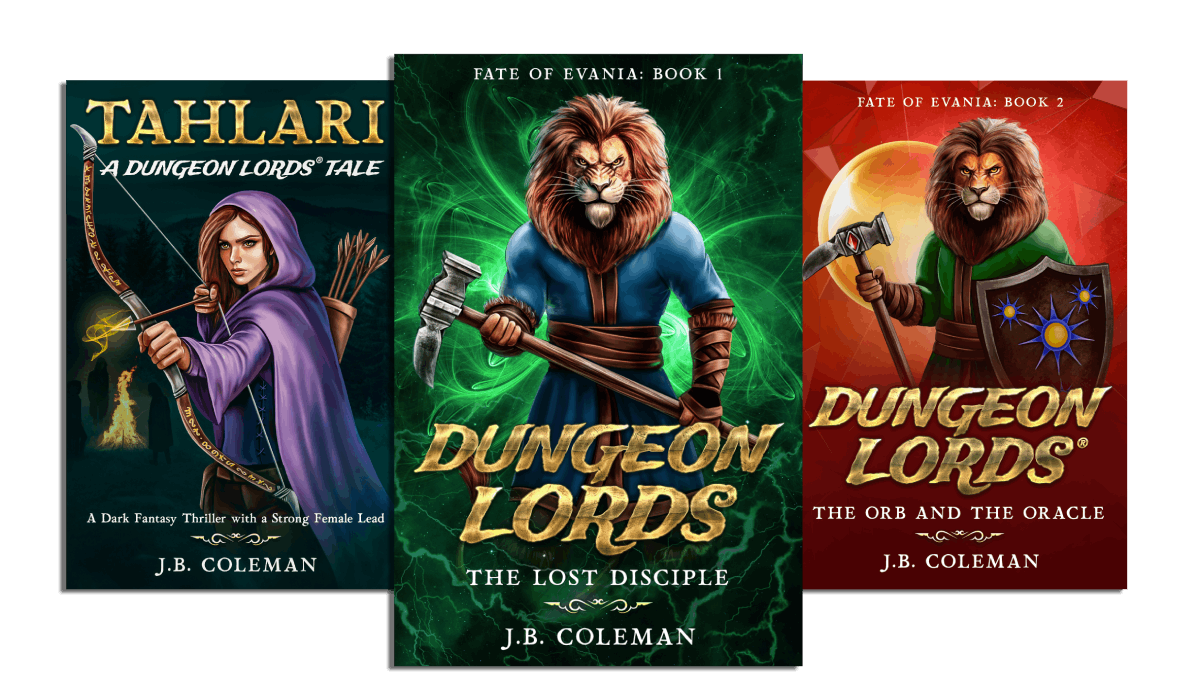

Experience A World Before the Dungeon Lords®
Get this 221 page book FREE!
Set long before the events of The Lost Disciple, long before the Dungeon Lords came to be, explore the events of Tahlari!