
Those who rule below
What Is a Dungeon Lord?
Explore the archetype and learn about Dungeon Lords throughout media
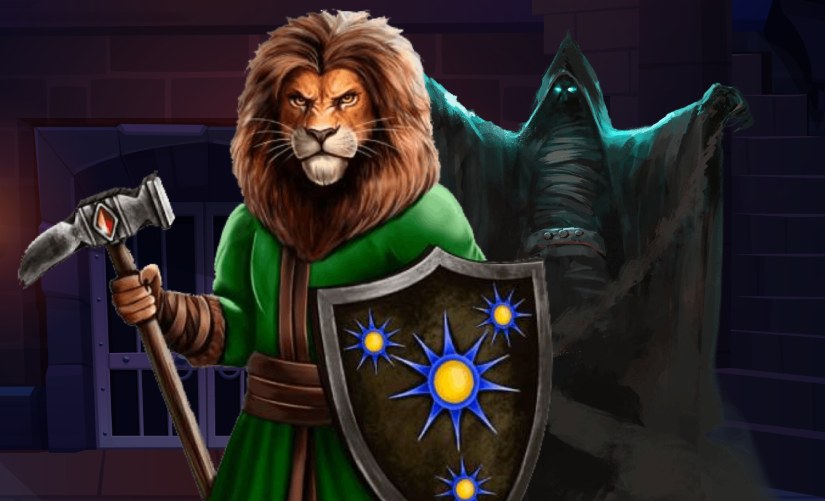
A Dungeon Lord is a powerful ruler who controls a dungeon, underground kingdom, fortress, or monster-filled domain in fantasy stories, RPGs, and video games.
Dungeon Lords are often portrayed as final bosses, dark rulers, or corrupted kings who command monsters, traps, and loyal followers from within their domain.
In fantasy fiction and RPG games, they typically serve as the central villain or ultimate challenge at the end of a dungeon crawl.
Experience A World Before the Dungeon Lords®
Get this 221 page book FREE!
Set long before the events of The Lost Disciple, long before the Dungeon Lords came to be, explore the events of Tahlari!

Dungeon Lords in RPG Games
TTRPGs and their computer counterpart RPG games are prime real estate to see a Dungeon Lord in action. These games often revolve around exploring dangerous dungeons, defeating monsters, and eventually confronting the powerful figure that rules over the entire domain.
But it takes more than being a boss in a dungeon to be a Dungeon Lord. When I think of a game like Zelda, for instance, there are plenty of dungeons in that game, and there are certainly powerful beings at the end, but more often than not they are just more creatures being controlled by the real power that is Ganondorf. Does Queen Gohma really have control of the other beasts in the great Deku tree? Not likely.
Now let's go through some more popular characters in TTRPGs and CRPGs that actually ARE Dungeon Lords.
Acererak (Dungeons & Dragons)
One of the most famous dungeon masters in fantasy gaming appears in Dungeons & Dragons in the form of the lich Acererak. Acererak is the creator of the legendary dungeon known as the Tomb of Horrors, a place designed specifically to challenge and destroy adventurers. The dungeon is packed with deadly traps, puzzles, illusions, and monsters that test every skill a party might have.
Rather than simply waiting in a throne room, Acererak lets the dungeon itself act as a weapon. Every hallway and chamber reflects his cunning, making him a perfect example of a Dungeon Lord who rules through control of the dungeon environment.
Galdryn (Dungeon Lords)
Galdryn embodies the traits of a cunning and powerful overseer who manipulates events from behind the scenes. Much like classic Dungeon Lords, he exerts control over the environment and the challenges the player faces, using his influence to shape the course of the adventure.
He commands respect and fear, demonstrated by his ability to imprison himself in a "crystal of confinement" as part of a strategic plan, and then break free to assist the player at a critical moment. His role in orchestrating the conflict between Volgar and Shaduroth, as well as manipulating larger forces such as the Celestial Order, highlights his mastery over both minions and adversaries.
I don't think Galdryn was meant to be considered a Dungeon Lord in the game, but if you think about the amount of control he had over absolutely every aspect of the journey, he fits the bill even more than the bosses at guarding the relics at the end of each dungeon.
Baal (Diablo II)
The action RPG Diablo II features the demon Baal as one of its main villains. Baal commands vast armies of demons and corrupted creatures that inhabit the dungeon areas leading up to his throne. Players must fight through waves of enemies before reaching him in the final confrontation.
While Baal is technically known as a demon lord, his role in the game closely mirrors that of a Dungeon Lord. He rules over the monsters of the dungeon and serves as the ultimate challenge waiting at the end of the journey.
There are infinite numbers of examples that could be given here, but hopefully these have laid out a few of the most popular throughout gaming history.
Dungeon Lords in Fantasy Books
Fantasy spans a HUGE range, all the way back to Tolkien, and as present as Sanderson, so again the number of examples we could give here are infinite.
Here are a few places we see dungeon lords throughout fiction.
Smaug (The Hobbit)
In the fantasy novel The Hobbit, the dragon Smaug rules over the Lonely Mountain after conquering the dwarf kingdom of Erebor. Beneath the mountain lies a vast network of halls, chambers, and tunnels that once belonged to the dwarves. Smaug now occupies these depths, guarding an enormous hoard of treasure. Anyone who dares to enter the mountain must sneak past the dragon or face his wrath.
While Smaug is technically a dragon rather than a traditional human-esque dungeon master, he fits the Dungeon Lord archetype well as the powerful ruler of a subterranean domain that adventurers must infiltrate.
The Dark One (The Wheel of Time)
In the epic fantasy series The Wheel of Time, the ancient evil known as The Dark One commands vast armies of monsters and corrupted followers. His prison deep beneath the world becomes the center of many conflicts throughout the series. Powerful servants such as the Forsaken operate as his agents, guarding locations tied to his power.
While the Dark One himself is rarely encountered directly, his influence spreads through dark fortresses, underground ruins, and dangerous strongholds that heroes must explore and conquer. In many ways he represents the ultimate Dungeon Lord, ruling over both monstrous armies and hidden places of darkness.
The Master of Whispering Tower (The Black Company)
In The Black Company, the powerful sorcerer known as Soulcatcher commands a fortress known as the Whispering Tower. This dark stronghold serves as both a base of operations and a deadly stronghold guarded by soldiers, magic, and loyal followers. Anyone attempting to challenge her power must first penetrate the tower’s defenses and survive the dangers within before facing the sorcerer herself.
Characters like Soulcatcher represent a classic Dungeon Lord structure in fantasy literature: a powerful ruler occupying a heavily defended stronghold where the environment, defenders, and traps all serve to protect the master at its center.
Featured Example – The Dungeon Lords of Evania
While the dungeon lords of my world, Evania, can have characteristics that are similar to the typical of the archetype, there are a lot of differences as well.
The term really breaks down into the three different phases of its evolution.
The First Dungeon Lord
Cosimir the Eternal was originally deemed the first dungeon lord, a mocking term used by a king of a nearby kingdom to make him look bad in front of the girl they both loved.
In The Revenant's Tale, I tell the story of how this played out, and how Cosimir went from a hard working Lord of Incarta, to the evil villain we've come to know.
As Cosimir was in charge of the mining facilities in Incarta, the term was meant to cut him, to reduce him down to nothing more than a lord beneath the ground, a lord of dirt and filth.
In fact, the insult cut so deep, Cosimir never forgot it.
The Underground Rebels
As he rose to power, Cosimir made sure that those who were previously in charge, those who had degraded him, felt his pain.
The term was carried over to the ruling class under the new regime. As kingdoms were forced underground by a mysterious deadly scourge that thrived in sunlight, Cosimir had a new set of Dungeon Lords to bow before him.
The New Beasts in Town
After Cosimir is defeated, those who defeated him were cursed to live as animalistic forms, and to be subject to the magic of the new ruler.
No, that's not spoilers. It happens before the first book of the Fate of Evania series even begins.
You see, the prophesy was broken by Eli, The Chosen One, when he decided to kill Cosimir on his own terms and live, instead of sacrificing himself to do the job right. Now all the disciples that had followed Eli into battle are doomed to bend to Eli's will as the new ruler of the land.
All of them, that is, except for Faro.


Dungeon Lords: The Lost Disciple Book Cover

Inside Formatting

Large Print

DL In Box

Audiobook Cover (7)
What about LitRPG?
LitRPG is a genre that LOVES to use dungeon lords. This genre runs on game mechanics and stats, which beg for a big nasty dungeon lord to end off a hard-fought or puzzled out dungeon. Again, there are endless examples as this genre has exploded in the most recent years, but it's hard to argue that Dungeon Crawler Carl is the big example here.
The Maestro (Dungeon Crawler Carl)
In Dungeon Crawler Carl, many powerful bosses control different floors of the dungeon. The Maestro is one of these bosses who rules over his area with authority. He commands monsters, enforces rules, and creates deadly challenges that crawlers must overcome.
As the youngest son of King Rust of the Skull Empire, The Maestro uses his power to torment and control others. He hosts the cruel show Death Watch Extreme Dungeon Mayhem, where he humiliates crawlers for entertainment. While not officially called a Dungeon Lord in the books, The Maestro acts much like one by ruling his section of the dungeon and standing as a major obstacle for heroes like Carl and Donut.
Types of Dungeon Lords in Fantasy
While being a dungeon lord is in and of itself a trope, there are still varying types of these rulers buried down in the dungeons of fantasy lore.
The Corrupted King
The Corrupted King is a classic archetype of a dungeon lord, adding layers of intrigue and villainy to any fantasy narrative. This ruler typically starts as a noble figure, often depicted as wise and just. However, over time, the corrupting influence of dark magic, power, or greed seeps into their soul, transforming them into a tyrant. They become rulers of subterranean lairs, driven by a thirst for more power or revenge, and they use their dungeons to hide their growing malevolence from the world above.
These dungeon lords often possess a combination of formidable physical strength, cunning intelligence, and dark magic. They maintain control over armies of monstrous creatures, undead minions, or entrapped spirits, enforcing their decrees with an iron fist. Their dungeons are filled with dangerous traps, arcane secrets, and unwelcoming paths designed to deter trespassers or those seeking to dethrone them.
An illustrative example of The Corrupted King is found in Evania, in a story yet-to-be released. The Eternal King finds himself as beaten, broken, and undead after a run-in with Cosimir. After hundreds of years of mental torture, he finally frees himself from his prison upon Cosimir's demise, and is open to wreak havoc on the living of Evania.
The Necromancer Lord
The Necromancer Lord is one of the most feared archetypes in any fantasy setting due to their mastery over death itself. These dungeon lords wield dark magic to command legions of the undead, creating an army that grows larger with each slain foe. Known for their commitment to forsaking natural laws, they explore forbidden knowledge, often at a high personal cost, to extend their lives indefinitely and hone their necromantic powers.
The typical domain of a Necromancer Lord is a dark, foreboding dungeon filled with the remnants of centuries past. The walls echo with the whispers of tortured souls, and every chamber holds the promise of macabre discovery. Their stronghold may include things like shadowy crypts or catacombs teeming with reanimated skeletons and restless spirits, all in hypnotic thrall to the lord's commands.
Unlike other dungeon lords who might resort to brute force, the Necromancer Lord relies on fear and manipulation. They are experts in psychological warfare, using their undead minions to unnerve and disorient enemies before pulling back the veil for a more direct confrontation.
One prominent example of a Necromancer Lord is the infamous Lord Acharanor from the realm
The Beastmaster Tyrant
While a dungeon lord will almost always be in control of monsters, the beastmaster is in control of beasts specifically. A normal dungeon lord can have smart cohorts that do his dirty fighting for him, but the beastmaster controls beasts of a more feral nature attack on command without a second thought.
Here you are fighting beats with instincts. Instincts that are solely based on survival, and to follow orders. That can be a lot more dangerous than a thinking adversary, especially when the one in control can think and strategize for them in a coordinated effort.
The Fallen Hero
The dungeon itself can be a place of evil and corruption. A hero may go in there with the best ideals and the intent on destroying the evil within, but things can change.
If a hero goes up against the evil, and it corrupts them, or they realize their ideals have been wrong all along, they may become a dungeon lord themselves. It is stories like these where the hero becomes what they seek to destroy. In this case that means ruling over a dungeon.
Dungeon Lords vs Dungeon Masters
A dungeon master is very specifically the in-real-life person who is in charge of a game of Dungeons & Dragons. They are in charge of knowing the rules, telling the narrative to the players, and making sure they players not only know how to play, but play correctly throughout the campaign. They want to give their players a challenging time without seriously trying to kill them constantly or the game won't turn out to be fun. It's a fine balance because the campaign must still be challenging with a great possibility of death.
A dungeon lord, in comparison, would be the big bad evil guy (BBEG) in charge of one specific dungeon within that campaign. The dungeon master would make this character up and play as them, as it's the dungeon master's role to play all NPCs within a campaign.
Dark Lords Vs. Dungeon Lords
A dark lord is someone with ideals that go against the norm, often to the benefit of just a small group that the lord has deemed deserving of higher rank in society. There is always an enemy group to the dark lord based solely on traits of that group of people.
Think Mudbloods and Lord Voldemort.
Also using this example we know that Voldemort doesn't really have a home base. He doesn't have a dungeon lair to call home. He had Wormtail take over his old house from the inkeeper in Little Hangleton, where he was then resurrected. He then set up shop in Malfoy Manor.
Dark Lords rule by their viciousness and their ideals. It doesn't matter where they do it from, their followers are still with them.
A dungeon lord on the other hand is master of his domain. He rules with an iron first from his throne within a dungeon. There may be ideals involved still, but they rule every aspect of their domain. Though if they have complete rule over their dungeon, their ambitions may lead them to want more, to seek more territory outside their domain.
One character in literature you could consider to be both a dark lord and a dungeon lord is Sauron from Lord of the Rings. He ruled Mordor with an iron fist, but he always wanted the entirety of Middle Earth.
In this case the people of Middle Earth had to work hard just to contain him to his "dungeon" of Mordor. Sometimes containing the evil is the only win you can get.
Are Dungeon Lords Always Evil?
Dungeon Lords are often portrayed as villains in fantasy settings, typically ruling over dark dungeons filled with traps and monsters. However, they are not necessarily always evil. The alignment and morality of a Dungeon Lord can vary depending on the story, game, or setting.
Some may be neutral or even good, protecting their domain and subjects from outside threats. Others might act out of self-interest or to maintain balance rather than sheer malice. Ultimately, whether a Dungeon Lord is evil depends on the context and the creator's intent.
In Fate of Evania, one use of the term Dungeon Lord are those that are rules over by Cosimir the Eternal. After the Scourge hit Evania and forced everyone underground, Cosimir took to calling the rulers of the dungeon kingdoms "Dungeon Lords" to mock them.